Showing posts with label Civil War. Show all posts

12 February 2017

Fain Family of Fannin County on Both Sides of the Civil War

To be fair and inclusive, the Fain family of which I am discussing is also rooted in Gilmer County, Georgia and the state of North Carolina.  Preliminary research also suggests a good number went West, but that's for another time.

I've only just begun researching the area including and surrounding Fannin County, Georgia.  In this very early stage of studying – to be honest and clear, and maybe show you how easy it is to begin – all I've really done is pay attention to historical markers, street names, cemeteries, and the like.  In doing so, I'm seeing overlaps of family names and such.  This simple observation has pointed me, for one example, in the direction of the Fain family.

100_7627In Blue Ridge (Fannin County), near a magnolia tree in the downtown city park, is a historical marker placed for the 150 year commemoration of the Civil War.  The subject is William Clayton Fain: Georgia Unionist.  The text reads as follows:

One of the leading Unionists in the state during the Civil War, William Clayton Fain was born in Georgia in 1825.  A Fannin County lawyer and state representative, he served in the 1861 Secession Convention, where he opposed Georgia leaving the United States and refused to sign the Ordinance of Secession.  During the Civil War, Fain was an outspoken supporter of the United States and an anti-Confederate leader among the sizeable number of Unionists in Fannin and adjoining counties.  In 1864, the U.S. Army authorized him to raise recruits, which he conducted into Federal lines.  Fain was captured and killed by Confederates near Ducktown, Tennessee, on April 6, 1864.  He was one of many Southerners who opposed the Confederacy, including 400,000 – primarily from the Upper South – who enlisted in the U.S. armed forces.

William Clayton Fain was a son of John Fain (b. abt 1797), who was a son of pioneer and patriot Ebenezer Fain (1762-1842).

The Other Side

Last June, on opening day of farmers market season, I visited the old Blairsville Cemetery in adjoining Union County, Georgia.  Though I wasn't looking for a Fain connection, I found one.

100_7770

JANE ADELINE FAIN
Beloved Wife Of Col.
JOHN S. FAIN
BORN FEB. 15, 1833
DIED SEPT. 13, 1861
A dear and loving mother gone to rest.

Jane, daughter of March and Sarah Addington, was a wife of Colonel John Simpson Fain.  Col. Fain was born in the Spring of 1818, a son of David and Rebecca Moore Fain.  David (b. 1782) was a brother of William Clayton Fain's father and another son of Ebenezer.

John Simpson Fain was a military man who served in three wars, including the Civil War.  According to an entry by Jeanette Fain Cornelius in the United Daughters of the Confederacy Patriot Ancestor Album (1999, Turner Publishing Co. Paducah, Ky), "In the Civil War he [Col. Fain] organized a company of North GA mountain men in February 1861 and served as captain of Co. G, 1st Regt. GA Regulars.  On May 21, 1862 he was elected lieutenant colonel of 65th GA Inf…" Short of a year later, he was promoted to the rank of colonel.  He served until June of 1863, when he tendered his resignation due to a medical condition.

The common ancestor of William Clayton Fain and John Simpson Fain is their grandfather, Ebenezer Fain.  As I mentioned before, Ebenezer was a pioneer and a patriot.  He was a pioneer of Southern Appalachia from a young age and throughout his full life.  Though born in Chester County, Pennsylvania, when Ebenezer was a young boy, the Fain family moved to southwest Virginia.  Before he was 16, the family moved down into what was then North Carolina.  About 1783, the then married Ebenezer Fain continued the moving tradition of his father by relocating to South Carolina.  Twenty years later, Ebenezer and family returned to what would eventually become Buncombe County, North Carolina.  Finally, about 1819, Ebenezer Fain and family were in north Georgia.  Each move advanced the family to more sparsely populated areas within the Southern Appalachia region.

Prior to his marriage and "settling down" with a family of his own in 1781, Ebenezer served his country in the American Revolution.  He enlisted on five distinct occasions.  One of those included service at the famous Battle of King's Mountain.

Travis H. McDaniel, a descendant of Ebenezer Fain, has written much about his family.  And some of that writing has appeared in the Georgia Backroads magazine.  One such article, "A Man in the True Sense of the Word: Southern Appalachian Pioneer Ebenezer Fain," was published in the Summer 2013 edition.  The following is from that article:

Just a few months later Ebenezer, his father, and several brothers enlisted in the militia at the request of Colonel John Sevier, who would later become Tennessee's first governor.  Sevier's militia, referred to as the Overmountain Men because they came from settlements west of the main crest of the Appalachian Mountains, played a key role in the Battle of King's Mountain, North Carolina, in 1780…This was a turning point in the southern operations during the Revolution.

Ebenezer Fain remained in Georgia until his death in 1842, spending some of his old age in the Hot House area of Fannin County.  Apropos to this posting, is a statement on the passing of Ebenezer attributed to his grandson, John Simpson Fain (also from Mr. McDaniel's article referenced above):

"I was a sort of a favorite child of my grandfather, and he principally raised and educated me, and I learned to love him when quite a child and I can never forget him.  My grandfather was a man in the true sense of the word, physically and mentally and morally.  His death was calm, and without a struggle…"

Ebenezer Fain and his descendants have left a lasting legacy in the mountains of north Georgia.

[Note:  Travis H. McDaniel wrote another article about his Fain family that may be viewed online >>> Clayton Fain's Last RideIn that writing, Mr. McDaniel delves deeper into the death of William Clayton Fain at the hands of the Confederacy.] 


06 October 2016

Colonial Park Cemetery, Savannah

100_7968Originally the parish burial-ground of Christ Church, some of the earliest inhabitants of the Colony of Georgia here sleep…On the moldering tombstones of the little cemetery there are scores of historic names, not a few of which are still bright on the muster rolls of the Revolution; but Whigs and Tories alike lie here entombed.  For more than fifty years after Georgia became a State, men of distinction in every sphere of life were here laid to rest in the very core of Savannah's heart.  Just when the first burial was made in Old Colonial is uncertain; but three distinct eras have contributed to the treasury of sacred dust which this little plot of ground contains – Colonial, Revolutionary, and Commonwealth.  No interments have been made here since the early [eighteen] fifties; but it was not until 1895 that by decree of the Superior Court of Chatham County it became the property of the city of Savannah.  With this transfer of title, an old issue between the parish and the town was happily adjusted, the walls on three sides were taken down, a competent force of workmen employed to repair the tombs, to open new walks, and to beautify the grounds; and thus out of the remnants of Colonial Cemetery emerged what is today known as Colonial Park.

100_7966

100_7967…Here, at almost any hour of the day, when the weather is pleasant, may be seen groups of little children, playing hide and seek among the tombs; energetic business men moving briskly along the walks which afford them convenient passage-ways to points beyond; or sightseers strolling leisurely over the green-carpeted area to read the inscriptions upon the ancient monuments.  Some of the oldest of the tombstones have disappeared forever.  Others rescued in broken fragments have been placed against the brick wall which still remains.  It is only fair to historic truth to state that the agencies of time, in producing this harvest of ruin, were re-enforced by the vandalism of Sherman's men, during the last year of the Civil War.  Not content with rifling the vaults for silver, they even made them abodes of habitation, emulating in this respect the example of a certain demoniac who lived at Gadara; and to judge from the mutilation of epitaphs the latter were no less possessed of unclean spirits than were the former.  ~ Lucian Lamar Knight, Georgia Historian, 1914

100_7982

100_7990

100_8025

aboutmeprofilepic

11 July 2016

Battle of New Hope Church

100_0739The Battle of New Hope Church:
Four miles north-east of Dallas lies the famous battle-field of New Hope Church.  Here one of the most stubborn fights of the bloody Atlanta campaign occurred in the late spring of 1864.  Says Prof. Derry [Story of the Confederate States, 1898]:  "It was ascertained that Sherman's forces had crossed the Etowah to the Confederate left.  Johnston marched promptly to meet them and took a position extending from Dallas to the railroad.  There now occurred a series of engagements between portions of the two armies, which Johnston and Sherman agree in calling the Battle of New Hope Church.  The first of these occurred on the 25th of May when the head of Hooker's column came upon Stewart's division near a little meeting house known as New Hope Church.  Hooker formed his division in parallel lines and promptly attacked but his vigorous assaults resulted in a succession of bloody repulses.  Two days later Sherman sent Howard with two divisions to turn Johnston's right.  At Pickett's Mill, thinking he had reached the extreme end of the Confederate line, Howard ordered an assault.

100_0684The charges of the Federals were repulsed, as Howard himself says, with much loss.  The Confederates gathered up as trophies 1,200 small arms.  The acknowledged loss to Howard's corps at Pickett's Mill was 1,500 men.  Cleburne's loss was 400.  The next day McPherson tried to withdraw from Dallas.  But Bates' division of Hardie's corps, quickly assailed him meeting a repulse in which they lost about 700 men." Sherman in his official report called the engagement at New Hope Church a "drawn battle." Nevertheless he was thwarted in his purpose, which was to cut off Johnston's supplies.  [Georgia's Landmarks, Memorials, and Legends by Lucian Lamar Knight.  Pub. 1913, pgs 849-850.]

I visited the New Hope Church Battlefield just over five years ago.  Here are some additional photos from the trip:

100_0747

100_0740

Marker in front of church and across from cemetery.

Red Top Mt, Marietta, Cartersville, Pickett's Mill, New Hope

Federal Attack on Hood's Corps marker is behind me.
View of road with cemetery on right and church across the street.

Red Top Mt, Marietta, Cartersville, Pickett's Mill, New Hope-001

New Hope Baptist Church Rebuilt 1959

100_0746

Red Top Mt, Marietta, Cartersville, Pickett's Mill, New Hope-002

100_0709

New Hope Cemetery

02 February 2014

Confederate Monuments of Savannah's Forsyth Park

"The chief pleasure-ground of Savannah is Forsyth Park..."

So sayeth famed Georgia historian Lucian Lamar Knight in his 1914 publication,
Georgia's Landmarks, Memorials and Legends.


He also writes of the Confederate monuments located within the park: "On an artificial mound, in the center of the park, stands the Confederate monument, a handsome structure of brown stone, and one of the earliest memorials in Georgia dedicated to the heroes of the Lost Cause..."


"To the north of this handsome pile, is a column, perhaps five feet in height, on which rests a marble bust of Major-General Lafayette McLaws..."


"...while to the south is a similar tribute to Brigadier-General Francis S. Bartow."

19 April 2013

The Capture of Jefferson Davis

Two miles to the west of Irwinville, in what is today a dense thicket of pines, there occurred at the the close of the Civil War an incident concerning which a host of writers have produced for commercial purposes an endless amount of fiction.

...That is how Lucian Lamar Knight began his chapter on the capture of Jefferson Davis in his 1913 publication of Georgia's Landmarks, Memorials and Legends. The thicket is not quite as dense today, but you can still get a feel of how things were. And some might recall the gossip surrounding the incident, as it most certainly has continued to be passed down over the last 148 years, one of the most common bits being that Davis was captured while wearing women's clothing.

Mr. Knight refutes this in his writing by way of Mr. James H. Parker, a Federal soldier who witnessed the arrest, who stated:

"I am no admirer of Jeff Davis. I am a Yankee, full of Yankee prejudice; but I think it wicked to lie about him or even about the devil. He did not have on at the time he was taken any such garment as is worn by women. He did have over his shoulders a waterproof article of clothing, something like a Havelock. It was not in the least concealed. He wore a hat and did not carry a pail of water on his head."

Mr. Knight also cited T. H. Peabody, one of the captors of Mr. Davis, as saying that the "hoop-skirt story was purely a fabrication of newspaper reporters."


Jefferson Davis Memorial Historic Site
338 Jeff Davis Park Rd
Fitzgerald, GA

Photos © 2010-2013 S. Lincecum

26 March 2013

Letters of Recommendation for Sgt. Edward J. Granniss

(A day late for "Amanuensis Monday!")

From Maj. Alex M. Speer, of the 46th Georgia Regiment. Dated 26 March 1862, recommending appointment of Sergeant E. J. Granniss:
Via Fold3.
Macon, Geo. 26 March 62
Hon R. P. Trippe
Dear Sir -
As you are aware, probably the 2d Georgia Battalion (Majr Hardeman) will soon go out of service, and I deem it not inappropriate, as I enter the service again to speak of some of those with whom I have been associated for the past eleven months.

I learn there are some vacancies here among the commissioned officers of the 1st Geo. Regulars, and it may be there are other positions to which those worthy & competent might be assigned by our Govt, to the advantage of the service.

In view of this, I most earnestly recommend for a commission Sergeant Edward J. Granniss of Company D, of the 2d Georgia Batt. Sergeant Granniss has now been in the service nearly 12 months, and has proved himself a meritorious and highly efficient officer and I have no question that is he could receive the appointment, that he would render valuable service.

He is well drilled, prompt, faithful and of fine habits and it would be a great gratification to his many friends in Macon if he were promoted.

It is true you are not our immediate Representative, but I feel that recommending & urging such an application you would not limit your exertions
[3 words?] in Favor of those of your own District, especially as with to many of our citizens you are better known than our immediate representative, and many of them would apply to you with more confidence of success than to others. I feel anxious to see those who went at first call receive the reward of their promptness and fidelity and I know of no one to upon whom such a favor could be more worthily bestowed than the gentleman I refer to. If you could aid him it will be greatly appreciated by one who appeals to you in his behalf, and who would look to you for aid as confidently as any one in our Delegation.
I am Very Truly
Alex M. Speer
Majr 46 Geo Regt
From Col Robt A. Smith of the 44th Georgia Regiment. Dated 24 March 1862, recommending appointment of Sgt. E. J. Granniss:
Via Fold3.
Macon, Geo. March 24th 1862
I take pleasure in earnestly recommending Sergeant Edward J. Granniss of Company "D," 2nd Georgia Battalion, as highly qualified and competent to fill a commissioned office, and recommend that he be appointed a 2nd Lieutenant in the "1st Georgia Regulars" or any other Regiment in the Confederate States Service.

Sergeant Granniss is well drilled in the School of the Soldier & School of the Company and is an excellent Instructor in both. He has some knowledge of the Battalion drill and during the last eleven months I found Sergeant Grannis to be one of the best instructed and most intelligent non-commissioned office in that Battalion.

He has sustained a moral character for many years and will fill a commissioned office with credit to the country.

Very Respectfully
Robt A. Smith
Col commdg
44th Ga Regiment
Edward J. Granniss received his commissioned office and climbed to the rank of 1st Lieutenant. He was killed little more than a year later, at the age of 22, at the Battle of Gettysburg. He rests in Rose Hill Cemetery at Macon, Bibb County, Georgia.

04 March 2013

Thomas Ledbetter's Reconstruction Oath of 1867 (Amanuensis Monday)

A bit of background from Ancestry:
The Reconstruction Acts of 1867 required Southern states to ratify the 14th Amendment, draft new state constitutions, and register voters, both black and white. In order to vote, men had to swear an oath of allegiance to the United States, and some were disqualified for their participation in Confederate government posts.
[--Begin Transcription--]

No. 416
STATE OF GEORGIA,
   COUNTY OF Rabun } PERSONALLY APPEARED before me this 7th day of ___ 1867, Thomas I. Ledbetter who states that he resides in the 636 Election Precint of Rabun COUNTY, GEORGIA, and who makes the oath as follows:

   "I, Thomas I. Ledbetter do solemnly swear in the presence of Almighty God, that I am a citizen of the STATE OF GEORGIA; that I have resided in said State for twelve months next preceding this day, and now reside in the County of Rabun in said State; that I am 21 years old; that I have not been disfranchised for participation in any rebellion or civil war against the United States, nor for felony committed against the laws of any State or the United States; that I have never been a member of any State Legislature, nor held any executive or judicial office in any State, and afterwards engaged in insurrection or rebellion against the United States, or given aid or comfort to the enemies thereof; that I have never taken an oath as a member of Congress of the United States, or as an officer of the United States, or as a member of any State Legislature, or as an executive or judicial officer of any State, to support the Constitution of the United States, and afterwards engaged in insurrection or rebellion against the United States, or given aid and comfort to the enemies thereof; that I will faithfully support the Constitution and obey the laws of the United States, and will to the best of my ability, encourage others so to do. So help me, God."

T. I. Ledbetter signature
   The said Thomas I. Ledbetter further swears that he has not been previously registered under the provisions of "An act supplementary to 'an act to provide for the more efficient government of the rebel States' -- passed March 2, 1867 -- and to facilitate restoration," under this or any other name, in this or any other Election District; and further, that he was born in South Carolina and naturalized by ___ on the ___ day of ___, 18__ in the ___
T. I. Ledbetter
SWORN TO AND SUBSCRIBED before me [cannot make out name]
Register of the 40th Registration District.

[--End Transcription--]

Thomas Ledbetter was born 2 September 1817 in South Carolina. By 1850, he was residing in Gilmer County, Georgia with wife Elender (b. 16 August 1825) and a couple of children. In 1860 and afterwards, he could be found farming in Rabun County. Elender passed on 29 November 1897, and Thomas followed 25 March 1889. They both were laid to rest side by side in the graveyard of Blue Heights Baptist Church at Mountain City, Rabun County, Georgia.

Thomas Ledbetter (b. Sept 2, 1817, d. Mar 25, 1889)
Elender Ledbetter (b. Aug 16, 1825, d. Nov 29, 1897)

Our loved ones have gone home.

Photo © 2011 - 2013 S. Lincecum

Complete source for above:
Ancestry.com
Georgia, Returns of Qualified Voters and Reconstruction Oath Books, 1867-1869 [database on-line]. Provo, UT, USA: Ancestry.com Operations, Inc., 2012. Original data: Georgia, Office of the Governor. Returns of qualified voters under the Reconstruction Act, 1867. Georgia State Archives, Morrow, Georgia. Georgia, Office of the Governor. Reconstruction registration oath books, 1867, Georgia State Archives, Morrow, Georgia.

05 April 2012

Then and Now: Allatoona Pass and Battlefield

The town of Allatoona, in Bartow County, was a travel hub prior to the Civil War. Wagon roads converged there, where ridges came together for an "easy" crossing of the Allatoona mountains. In 1864, the Battle of Allatoona was fought between Confederate and Union soldiers. More than 1,500 men lost their lives, some being buried on the battlefield.

I visited this battlefield about a year ago, and it is amazing how little has changed in these almost 150 years. Though the land was reclaimed by the forest, the battlefield is easy to view with the still standing plantation home, deep railroad cut, easily traveled old wagon road, visible trenches, and defined Star Fort.

In 1866, photographer George N. Barnard captured an image of the town and railroad. I found it on an informational marker maintained by Georgia State Parks & Historic Sites:

"The plantation residence on the far left is the John Clayton (now
Mooney) House.  This privately owned structure looks much the
same today as in the Barnard photograph.  Pictured immediately left
of the railroad tracks stood the Allatoona train depot.  Across the
tracks were the warehouses and sheds in which large quantities of
Federal supplies were stored at the time of the battle.  Built to
defend the railroad below, the Star Fort is visible atop the hill on the
left.  The Tennessee Wagon Road winds northward up and over the
hill to right."
I wish I would have thought to attempt to recapture an image at the same angle as Barnard's, but I didn't. I did get a couple of nice photos, though. The first is of the 1830 Clayton-Mooney Home, and the second is of the deep cut where the Western & Atlantic railroad once ran.


(As an Amazon Associate I earn from qualifying purchases.)

01 February 2012

Haunted Georgia? "The Bealls 1860 Restaurant's Ghostly Fare"

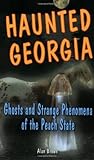
I bought this book (Haunted Georgia: Ghosts and Strange Phenomena of the Peach State) by Alan Brown for my grandfather as a Christmas present last December. I am not one to believe every ghost story I read or hear, but do find them of interest. Especially those rooted in history. Even though it was a gift, I couldn't resist peeking and jotting down a few notes from a couple of the stories in the book. I knew Grandpa wouldn't mind, and I plan to borrow and finish reading it when he's done. :-)

One of the stories in the book is "The Bealls 1860 Restaurant's Ghostly Fare." Located at 315 College Street in Macon, GA, the restaurant was open in the 1990s. The building was once a residence, built by Nathan Beall around 1860.

Beall House
Photo © 2012 S. Lincecum
The crux of the story of this house centers around sorrow. Nathan Beall, a wealthy planter born about 1799, was enumerated in the 1860 Bibb County, GA census with his wife Martha, daughter Juliet R., and son George C.1

According to the book, George enlisted in 1862 with the 47th Regiment of the Georgia Infantry. And "by February 1863, he had become one of thousands of young soldiers listed as missing."2 I might disagree here after consulting the service records of two George Bealls that served in the Confederate Army at approximately the same time. I initially found the two men with Ancestry's American Civil War Soldiers database.3

Moving to Fold3, I looked over the Confederate service record for George Beall (aka D. W. Beall, aka George W. Bell) of the 47th Georgia Infantry. This man enlisted at Randolph County, GA and was present with his company in Mar/Apr 1862, May/Jun 1862, Jul/Aug 1862, Sep/Oct 1862, Nov/Dec 1862, and Jan/Feb 1863.4

The other soldier, George C. Beall (aka George C. Beale, aka G. C. Beal), enlisted at Macon, GA with the 28th Siege Artillery Battalion. He was elected 1st Lieutenant July 1863 and resigned a month later. In October of the same year, this George is in a hospital at Macon.5 I think this is more likely the son of Nathan Beall, and I question exactly how "missing" he was.

The next portrait of sorrow regarding the Beall house deals with Nathan's daughter Juliet. Haunted Georgia states her husband, Dr. George C. Griffin, disappeared about the same time ("between Petersburg and Macon") as Juliet's brother while serving as an assistant surgeon during the Civil War... "For the rest of her life, Juliet sat in the study on the second floor, where she stared out the window in the hope that someday her husband would return home."6

Juliet R. Beall married George G. Griffin 4 July 1861 in Bibb County, Georgia.7 G. G. Griffin's service record states he served with the 8th Georgia Infantry. He was indeed relieved of his duties in Petersburg, VA and told to report to Macon, GA for assignment.8 I don't know if he went missing for some time or not, but I doubt Juliet spent the "rest of her life" waiting for him to return home. The 1870 Hamilton, Harris County, Georgia census9 and the 1880 Cassville, Bartow County, Georgia census10 show Dr. George G. and Juliet R. Griffin together with a growing family. George died 4 April 1904 in Covington, Georgia.11

About the end of the Civil War, Nathan Beall sold his home to Leonidas A. Jordan.12 Lee was "a cultivated gentleman of great wealth, and is known throughout the state as one of the largest planters and real estate owners in Georgia."13

Sorrow seemed to continue to permeate the building even with a new family residing within. After a twenty-three year marriage, Lee's wife Julia died 30 December 1891 of grippe and pneumonia. She did not die in her Macon home, though. She died at the home of her mother in Wynnton (Columbus), Georgia.14

A few years after Julia's death, Leonidas married Miss Ilah Dunlap. She was quite a bit younger than he, about 50 years. Supposedly, Ilah looked to Leonidas just like his first wife at that young age. And by the way, Ilah became the sole beneficiary of Lee's vast fortune and real estate holdings.

Photo © 2011/2
S. Lincecum
Continuing along with the Haunted Georgia story, a most sorrowful marriage between Ilah and Leonidas lasted until his death in 1899. It is written that Ilah kept her husband a "virtual prisoner in his own home." None of his friends and family were even allowed to visit. Furthermore, upon his death, Ilah buried Leonidas beneath "only a modest county marker." Conversely, upon her death, Ilah was "buried in the largest mausoleum in Macon's Rose Hill Cemetery."15

I've done a bit of research about Ilah, but did not uncover much about her true relationship with Leonidas. I have no idea if she cared for him deeply, just married him for the money, or waffled somewhere in between. I can say she was a daughter of a wealthy man, and her inheritance from her father was quite substantial. This came a few years after the death of Leonidas. And while Leonidas does not have a grand marker in his burial place of Memory Hill Cemetery in Milledgeville, GA, he is buried in a JORDAN family plot -- next to the tallest monument in the cemetery. Ilah is also buried with family -- the DUNLAP mausoleum was erected for her father.

After the Beall house became a restaurant in 1993, quite a bit of paranormal activity was witnessed. This included ice cubes "jumping" out of glasses, a ghostly presence of a young girl in a white dress, glasses flying off counters, books flying off shelves, and chandeliers flickering on and off. The most notable disturbance occurred one year close to the anniversary of Julia's death: "The waiters were going about their business when all at once, all of the pipes began to shake. The noise became so loud that some waiters placed their hands over their ears."16

Does all this mean the Beall house is haunted? I have no idea. But, if you've stayed with me this far, you might be interested in this: On the day I photographed the outside of the building I took more than 20 pictures. Every one came out clear as a bell, save one -- an image of the front of the Beall house.

Photo © 2012 S. Lincecum


Footnotes:
1. 1860 U.S. census, Bibb Co., Georgia, population schedule, Macon, p. 132, dwelling 985, family 1020, Nathan H. Beall household; digital image, Ancestry.com (http://www.ancestry.com : accessed January 2012); citing NARA microfilm publication M653.
2. Alan Brown, Haunted Georgia: Ghosts and Strange Phenomena of the Peach State (Mechanicsburg, PA: Stackpole Books, 2008), 31.
3. "American Civil War Soldiers," database, Ancestry.com Operations Inc., Ancestry.com (http://search.ancestry.com/search/db.aspx?dbid=3737 : accessed January 2012), entries for George Beall.
4. "Compiled Service Records of Confederate Soldiers Who Served in Organizations from the State of Georgia," digital images, Fold3 (http://www.fold3.com : accessed January 2012), entry for George W. Bell, Pvt., Co. B, 47th Georgia Inf., Confederate; citing NARA M266 - Compiled service records of Confederate soldiers from Georgia units.
5. "Compiled Service Records of Confederate Soldiers Who Served in Organizations from the State of Georgia," digital images, Fold3, entry for George C. Beall, 1st Lt, Co. A, 28th Georgia Siege Artillery Battalion, Confederate.
6. Brown, Haunted Georgia, 31.
7. "Georgia Marriages, 1808-1967," database, FamilySearch (https://www.familysearch.org : accessed January 2012), entry for Juliet R. Beall and George G. Griffin, married 4 July 1861; citing Marriage Records, FHL microfilm 203,066 - index entries derived from digital copies of original and compiled records.
8. "Compiled Service Records of Confederate Soldiers Who Served in Organizations from the State of Georgia," digital images, Fold3, entry for G. G. Griffin, Assistant Surgeon, 8th Georgia Inf., Confederate.
9. 1870 U.S. census, Harris Co., Georgia, population schedule, Hamilton, p. 157, dwelling 1193, family 1204, George G. & Juliet R. Griffin household; digital image, Ancestry.com (http://www.ancestry.com : accessed January 2012); citing NARA microfilm publication M593.
10. 1880 U.S. census, Bartow Co., Georgia, population schedule, Cassville, p. 2, dwelling 13, family 14, George & Juliet Griffin household; digital image, Ancestry.com (http://www.ancestry.com : accessed January 2012); citing NARA microfilm publication T9.
11. "Directory of Deceased American Physicians, 1804-1929," database, MyFamily.com Inc., Ancestry.com (http://search.ancestry.com/search/db.aspx?dbid=7833 : accessed January 2012), entry for George G. Griffin.
12. Brown, Haunted Georgia, 31.
13. "The Marriage of Miss Ilah Dunlap to Colonel Lee Jordan at Macon," The Consitution (Atlanta, Georgia), 26 April 1894; digital image, GenealogyBank (http://www.genealogybank.com : accessed January 2012), Historical Newspapers.
14. "Sudden Death of Mrs. Lee Jordan," Columbus Daily Enquirer (Georgia), 31 December 1891; digital image, GenealogyBank (http://www.genealogybank.com : accessed January 2012), Historical Newspapers.
15. Brown, Haunted Georgia, 31.
16. Brown, Haunted Georgia, 32.

07 April 2011

Civil War Era Records Free Access Week at Ancestry

You may have already heard, but just in case you haven't: Ancestry is offering free access to all of their Civil War era records for one week, beginning today.

Some records they house that may be of interest to Georgia researchers are:

· Confederate Soldiers Compiled Service Records, 1861-1865
· Georgia Confederate Pension Applications, 1879-1960
· Confederate Applications for Presidential Pardons, 1865-1867

The last database includes Samuel and Edward Felder's applications for Presidential pardon recently written about on this blog here and here, respectively.

Also included in the free access promotion is their newly launched Military Headstone Collection, described as "the most comprehensive searchable collection of Civil War era gravestones." This database includes the National Cemetery in Marietta, Georgia (1866-2010).

Good Luck in your searches!

22 March 2011

Samuel Felder's Confederate Application for Presidential Pardon (Amanuensis Monday Tuesday)

Yesterday I posted a transcription of Edward Lewis Felder's Confederate Application for Presidential Pardon. Today I will bring you his father's. Samuel Felder was born 24 November 1796 in South Carolina, possibly a son of Henry Felder and Margaret Standmeyer. In 1860 he was living in Houston County, Georgia with a combined real and personal estate valued at $107,152. He was the owner of twenty slaves.

Samuel's son (Samuel Felder, Jr.) enlisted and fought with Company C, Georgia 6th Infantry Regiment. Samuel, Jr. died from wounds 1 June 1862, most likely in Virginia as a result of the Battle of Seven Pines.
[Pg 1, Left Side]
Houston Co Georgia
Aug 16th 1865

Felder Samuel
Citizen

Applies for Pardon

_____ Dist of Columbus
Macon Georgia
Aug 16th 1865
Respectfully forwarded
Jno Thorton
Brig Genrl U.S.V.
Comdry

[Pg 1, Right Side]
Houston County
Georgia
Samuel Felder
_____ application for pardon

Executive Office
Provisional Govt of Geo
Milledgeville, Sep 8, 1865
This applicant makes what I believe to be an honest confession of his great sorrow in favoring the secession of Georgia. He is represented as a reliable and conscientious man, and certainly takes a proper view of the results of the war. So, I believe he will in future make a peaceable & loyal citizen. I recommend his pardon.
J. Johnson
Pro Gov of Ga

Eli Warren Atto for applicant & his address is "Fort Valley
Houston County
Georgia"

[Pg 2]
Perry, Houston County, Georgia
August the 12th 1865,

To His Excellency Andrew Johnson, President of the United States -- J.C.

I am a citizen of Houston County Georgia, residing in the town of Perry. I am Sixty eight years old & have a wife & five living children - I am excluded from the benefits of the Amnesty Proclamation of your Excellency of the 29th May last and under the 13 chapter therein only & Because I was a voluntarily participant in the late Rebelion of the South against the United States - and was on the said 29th of May & am now worth in taxable property over the sum of Twenty thousand ($20,000) dollars besides slaves, and respectfully ask that your Excellency grant me a special pardon, that being the only exception in said proclamation _____

The government of the United States has no property of min it its possession -- nor am I aware of having any property of the Government of the United States in my possession -

No proceedings have been commenced against me in any of the courts of the United States for Treason - or for conspiracy against the Government of the United States - so far as I know, or believe or ever heard of -

I am neither a politician or professional man and never held a civil or military office in my life except some 40 years ago I was a Justice of the Peace, - I ever & always have been a farmer and have devoted the most of my time & attention to that business -- And I know less about the Constitution & political matters than those [Pg 3] should know that have made them their study. An unfortunate strife has long since existed between the North & the South upon the slavery question -- Many leading politicians of the South professed to believe - & so assured the people, that for Georgia or the slave states to secede from the union would put an end to that strife, be a complete remedy for that evil -- That it was a rightful & peaceable remedy, that instead of causing a war between the two sections that it was a measure of peace between them - & would result in good to both North & South - because it would restore & establish peace between the two sections. -- This was what many of the leading politicians in the South assured the people -- Those to whom I had been in the habit of looking for advice on political matters & who had my confidence assured me that no war - but peace between the two sections on the slavery question would result from secession - and confiding in their opinions & judgement on the subject of secession & wishing to see the strife so long & so unhapily existing between the North & the South on the slavery question put an end to - & that to peaceably - I was for that cause, in favor of Georgia's seceeding from the Union - & so voted for members of the Convention that passed the Ordinance of Secession. -- In giving that vote, I am satisfied that I at least made a great mistake - for I was deceived as to the effect of secession upon the peace of the country - & my conduct in that regard I regret. ~

But what assumed to be a Confederate Government having soon thereafter been established - I then felt it to be [Pg 4] right to aid to some extent the country of my residence in the war that it seems so unexpectedly to me, resulted from or _____ out of secession -- In this though I never took up arms or in any way entered the service of the Confederate States - so called - but did contribute something in money & supplies to sustain the confederate soldiers in the field - this I did though to a limited extent. ~

But the war has terminated disastrously to the South & I most heartily wish it never had commenced & I pray your Excellency to grant me a special pardon as I desire to be restored to all the rights & privileges of a citizen of the United States. ~ I recognize the fact that slavery is dead & cannot be revived -- I have taken an Amnesty Oath hereto attached & will in good faith conform to all the obligations thereby imposed.
I am very Respectfully
Your Obedient Servant
SamL Felder

Georgia
Houston County

Before me personally came Samuel Felder of said county & state and being duly sworn says on oath that the facts stated in his foregoing petition are true. ~
Sworn to & subscribed before me, this August 12th - 1865
W. T. Swift Ordinary
Houston Co Ga
Samuel died a couple of years later on 3 October 1867. He is buried in Evergreen Cemetery at Perry, Georgia. His epitaph states he was A Baptist 40 Years.